

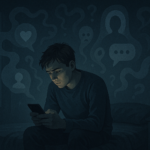



In the last couple of days, I’ve been getting caught up on a term that’s popping up everywhere on the web: “brain rot.” At first, I thought it was another internet meme — one of those dramatic terms that has to be used to make it go viral. However, the more I researched it, the more I felt uncomfortable with how well it described something I do all the time.
That feeling when you’ve scrolled for too long, and your brain is fuzzy, your concentration is gone, and you can’t recall what you were even looking at. When you close an app, and you’re left with a weird emptiness, restlessness or over-stimulation at the same time. That’s what people call “brain rot,” and it’s not simply about being tired or distracted. What’s really disturbing is how our regular exposure to fast, broken-up digital content is silently transforming how we think, how we feel, and how we focus.
I found the most disturbing thing to be that brain rot is not an instantaneous loss of intelligence. Brain rot is a very subtle, very gradual thing. It manifests itself through shorter attention span, weaker memory, reduced patience for deep thinking, and a continuous need for stimulation. We are living in a constant state of mental noise; constantly switching between posts, videos, headlines, etc., and only occasionally will we spend enough time reading anything so that it will truly sink in.
As soon as I began to look into why this occurs, I came across dopamine again and again. Dopamine is the brain’s reward chemical; it’s what motivates us to pursue new, exciting, pleasurable experiences. And scrolling is essentially a dopamine machine. With each swipe, comes the promise of something better (a funny video, a shocking headline, a post that makes you feel acknowledged). Either you receive the payoff, either you don’t, but the unpredictability is what continues to motivate us. It is the same mechanism by which slot machines are addicting.
One of the scariest aspects of this is how rapidly the brain adapts. When we teach it to expect constant novelty and instant gratification, everything else begins to appear dull. Reading a book seems arduous. Having quiet time to think feels awkward. Conversations can feel slow. It is not that we have lost the capacity to concentrate — it is that we have taught our brains to desire distraction.
This is particularly bad because none of this is random. Social media platforms are created to keep users engaged for as long as possible. Infinite scroll. Autoplay. Notifications. Algorithms that discover exactly what captures your interest, and provide you with more of the same. The longer you remain, the more your brain becomes accustomed to the cycle of stimulation and reward.
Ultimately, however, this impacts how we think.
When I attempted to focus on something that actually matters to me (reading, writing, studying) I found my mind wandering almost instantly. It was not due to lack of interest, but rather my brain’s expectation for immediate reward. No likes. No instant response. No dopamine rush. Only effort.
Additionally, when we consume information in short, disconnected chunks, our brains cannot retain that information. We scan rather than digest. We recognize rather than recollect. I can scroll for hours and retain nearly no information. Not because the material is irrelevant, but rather because I did not give my brain the opportunity to connect with that material on a deeper level.
Lastly, scrolling constantly breaks our focus. In a matter of seconds, it may shift from a friend’s photo to a tragedy, to a joke, to a heated debate. The speed at which our emotions are pulled in different directions is as rapid as the speed of our focus. We laugh, then become anxious, then angry, then numb — all within minutes. This emotional rollercoaster is draining, even though we may not realize it at the time.
Then there is comparison.
Browsing is essentially, you’re always glancing through others’ lives — typically their best, most edited, and polished moments. You know they’re showing you only the best parts of their life; yet, we subconsciously continue comparing ourselves. Are we doing enough? Are we behind? Why is everyone else so happy, successful, and well-put-together? As you scroll, that small, nagging feeling of not meeting expectations grows — and especially as browsing becomes an every-day thing.
To my surprise, I’ve found out we browse and look at content much of the time (even) when we know that it will leave us feeling bad. This is what’s called “doom-scrolling,” which is a pattern of using social media compulsively, despite knowing it causes us increased anxiety and stress. Our brains are trying to find a way to regain a sense of control and/or clarity; however, we get overwhelmed by all of the content.
Also, we tend to lose quality sleep. Browsing before bedtime may appear innocuous, but it keeps your brain engaged when it needs to wind down. The light, stimulation, and emotional impact on the content all interfere with your ability to fall asleep and stay asleep. Additionally, poor-quality sleep affects everything else in your life: focus, mood, patience, emotional regulation. Thus, it creates a cycle that is difficult to break.
As I continued learning, I could see that brain rot isn’t about technology being inherently evil; it is about balance. It is about giving tools intended for engagement the opportunity to quietly dominate our attention, time, and mental space.
Fortunately, the damage caused by brain rot is reversible. Brains are capable of adaptation. When we teach our brains to perform certain actions, we can also teach them to stop performing those actions.
I’ve come to realize that the answer to brain rot isn’t getting rid of every single device or disconnecting completely from the internet. It is creating intention around how we use our devices. Creating friction in areas where there was once no friction. Not opening an app immediately after you receive a notification. Setting boundaries to protect both your focus and your rest. Creating space for boredom again — even if it seems uncomfortable.
Small changes add up to bigger changes. Taking the phone away an hour prior to bedtime. Placing the phone in a different room when you work. Selecting one meaningful post versus an infinite number of posts. Replacing scrolling time with reading, walking, writing, or simply sitting in silence with your own thoughts.
At first, these behaviors might feel awkward due to your brain being detoxed from continuous stimulation. However, as your brain returns to its natural state, your ability to focus improves. Your thoughts become deeper. Your perception of time expands instead of contracting.
Ultimately, I believe what brain rot has shown me is this: our attention is one of the most valuable commodities we possess. How we direct it influences how we think, how we feel, and how we perceive our lives. In a world competing for our attention at every turn, choosing to preserve it is an act of respect for ourselves.
We don’t have to live mentally exhausted, emotionally stimulated, and perpetually distracted. We can reclaim control over our minds — gently, deliberately, and imperfectly.
Honestly, that is perhaps one of the most significant decisions we can make today.